
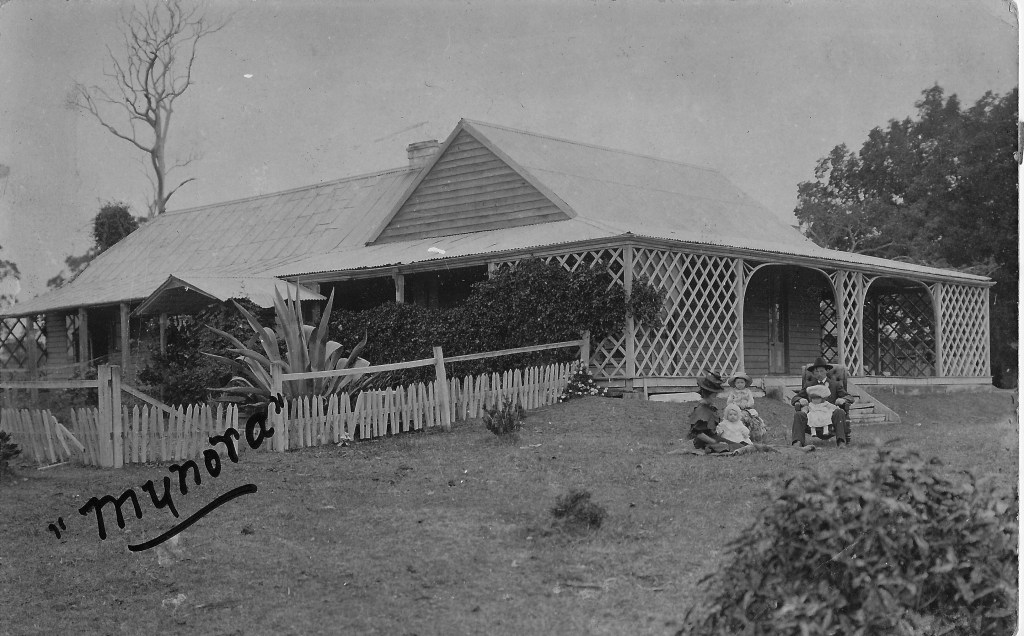
From small mixed farms and pioneering dairies at Mynora to ambitious trials of cotton, wine grapes, wheat, sweet potatoes and even bananas, Shirley Jurmann’s new book Moruya’s Eastern Settlements reveals how local settlers tested the limits of soil, climate and ingenuity.
Drawing on vivid historical records and firsthand reports, it traces the rise and gradual decline of dairying while celebrating the remarkable diversity of crops that once flourished along the Moruya River.
AGRICULTURE from Moruya’s Eastern Settlements
Extracted from Moruyas Eastern Settlements by Shirley Jurmann
Many of the small land holders in the area ran dairies with the accompanying pigs, chickens, orchards and vegetables. The Strahan property known as ‘The Orchards’ was noted for its variety of fruit and vegetables.
Dairying
The following farmers from the district were registered as shareholders in the Moruya Dairy Co-operative. John Delsoky (1892), Peter Kelly (1903), Martin Strahan (1892) and Robert Walsh (1892). ‘Mynora’ was still listed as a dairy in the 1960 records of the Department of Agriculture.
The 1960’s records of the Department of Agriculture show only 3 farms still dairying in the area all of which had electricity and town water.
Charles William Cowdrey at ‘Mynora’ in 1965 had 28 cows in milk and 7 dry along with 2 bulls on 61 acres. A comment on his record says Ceased milk vending 1966, though the records show he was still dairying with the same herd numbers up until 1969.
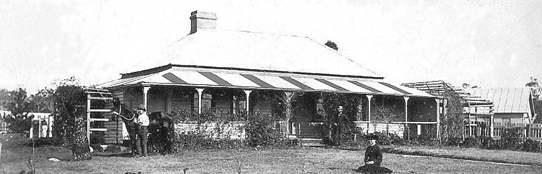
Noel Llewellyn Jeffery at ‘Braemar’ Mynora in 1965 had 39 cows in milk and 16 dry along with 2 bulls on 250 acres. He was still dairying with similar herd numbers in 1969.
Kevin W P Ryan at Mynora, Moruya in 1965 had 34 cows in milk.and 14 dry along with 2 bulls. In 1969 he was still dairying but the amount of land had reduced to 140 acres.
Many other small crops were grown as experiments to see just what they could successfully grow in the area.
Cotton 1863

In his garden at Mynora Mr W.S. Caswell had five cotton plants growing . They were in full flower and flourishing luxuriantly. He had planted a considerable quantity but only five plants came up. Mr Caswell judged that the seed purchased by him must have been of an inferior quality as those which came up thrived exceedingly well. The fact that these plants had survived the ordeal of such an unfavourable season showed that there was little doubt that cotton could be successfully grown on the Moruya River.
“Adelaide Observer” 7th March 1863 copied from the “Moruya Messenger”
Potatoes 1863
Potatoes were grown in the area from early on. In 1863 Mr Wyatt had the honour of producing the first potatoes of the season. They were a new kind, the seed which was procured by Mr Shottin, and bore the name of American Rose. It was said they were ready for the market in two months after planting.
“Bega Gazette” 16th October 1863
Riesling Grapes 1865
The Moruya Examiner spoke in glowing terms of a sample of colonial wine made at Mynora by Mr W.S. Caswell. It was only ten weeks since it was made but was perfectly clear and bright. This was considered astonishing by the judges who tasted it and found it to be a very superior article, beautifully fine, delicate and with good body. Mr Caswell considered the Riesling and Hermitage grapes to be very suited to this country. He had cultivated over twenty-five varieties of grape, but not all were suited to the conditions in Moruya. The capabilities of this district for wine producing should encourage all who could to cultivate the vine.
Mount Alexander Mail 27th June 1865
Wheat 1866
Wheat crops were looking exceedingly good at Mynora where Mr Costin had a premium crop. He had followed instruction given by Mr Macarthur as to sowing. If the weather held good the crops around Moruya would this season be as good as any for the last ten years.
Empire 23rd October 1866, copied from the Examiner
Sweet Potatoes 1894
One day in May 1894 Mrs Jenner called in at the Examiner Office with a sweet potato grown by her husband Joseph Jenner. The sweet potato weighed in at just a shade under 4lbs. On the same root there were 9lbs of smaller ones. The large potato when cut was perfectly solid and when cooked was most delicious in favour. Anyone desiring cuttings of this prolific and nutritious vegetable could get them free of charge from Joe.
Moruya Examiner 19th May 1894
Bananas 1914
Mr J.L. Jenner experimented with growing bananas on his property at Newstead in 1914. He was able to bring into town a bunch grown by him. The bananas were a little smaller than average but fully ripe and full of flavour. Mr Jenner was well pleased with his experiment.
South Coast and Wollongong Argus 29th May 1914
Read more in Moruya’s Eastern Settlements by Shirley Jurmann

 MORUYA and District Historical Society Blog
Leave a reply to mdhs Cancel reply