

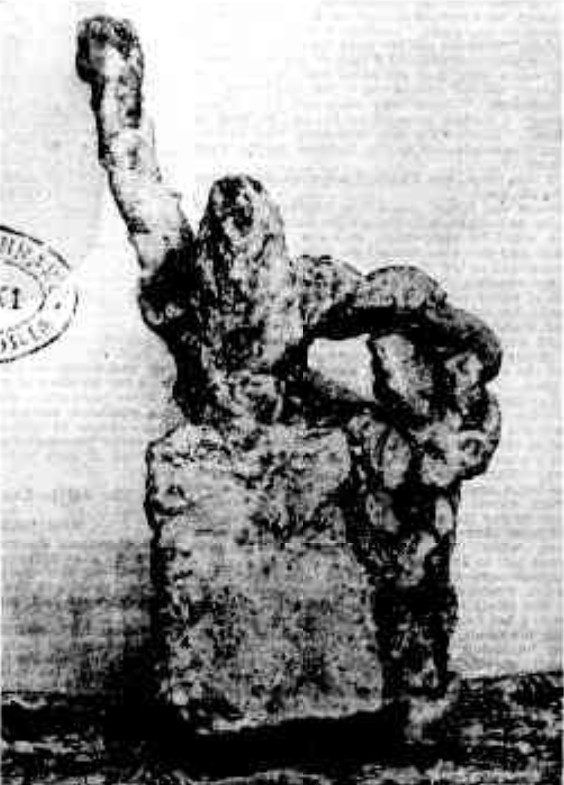
Image: Australian Town & Country Journal 5 Oct 1901, downloaded from NLA Trove
The story of the Rover is well documented. Seeking shelter in Broulee Bay during a storm, the captain unfortunately anchored in the wrong spot. The anchor did not hold, and the vessel was swept up in the heavy seas, rolling over and drowning the captain and 11 others. The survivors were rescued by local Aboriginal people, an act of bravery that prompted Captain Oldrey to award breastplates to four of them.
The Rover made headlines again in 1901 when remnants of the wreck washed ashore. Locals managed to secure some souvenirs from the wreck, including a cannon, which was salvaged by Abraham Jennings, a sawmiller from Tomakin. The Rover was a small coastal trading vessel, built in 1841 on the Manning River, measuring 26 metres in length and 5.5 metres in width, so the cannon would presumably have been modest in size. On board at the time of the sinking, besides the crew, were 15 convicts and their guards.
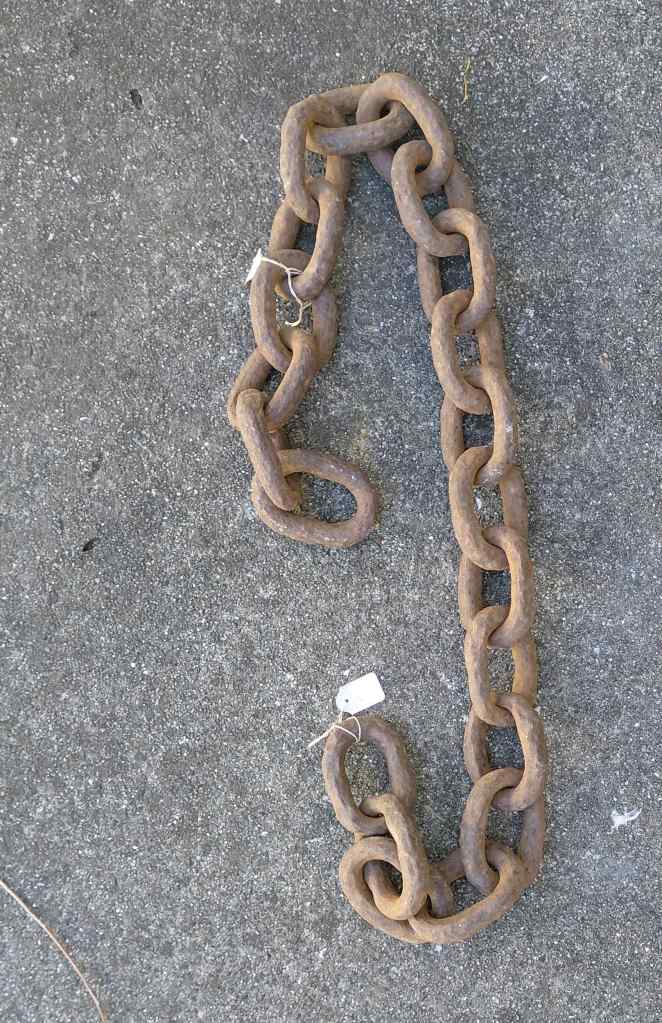
The real mystery now is: where is the cannon today?
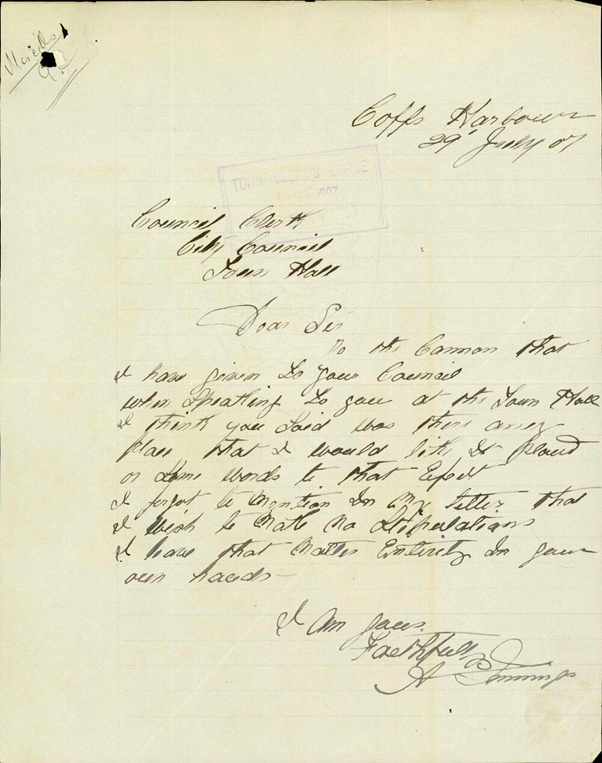
Records in the City of Sydney Archives show letters from Abraham Jennings in 1907 offering the cannon to the Council, along with the Council’s acceptance. The letters suggest Jennings believed he had already delivered the cannon, but there is no record of the Council ever receiving it. At the time, Jennings was retired and living with his son in Coffs Harbour, but it’s unclear whether the cannon remained there or somewhere in Moruya or Tomakin.
The fate of the Rover’s cannon remains a fascinating historical mystery—a tangible link to a dramatic shipwreck, local heroism, and the coastal life of 19th-century New South Wales.
Can you cast some light on where it ended up?
More details on the wreck of the Rover:
- The Wreck of the Rover – MDHS Journal, Sep 1997
- The Loss of the Rover – Broulee Bay Folklore, Myth & Legend
- Helping Hands: the Wreck of the Rover – Moruya Storylines
And the offer – and loss – of the cannon

Downloaded from NLA Trove
Downloaded from NLA Trove
 MORUYA and District Historical Society Blog
Leave a Reply