

Behind a rusted everyday object lies a story which is a tangible and poignant reminder of the impact that World War 1 had on local families and communities. The object is a pocket knife donated to the Museum by the Bishop family, and was returned to them from the battlefield of the Fromelles, in Northern France.
Raymond was born at Bonny Doon, a farm near Nerrigundah. After leaving school he worked as a wheelwright and coach builder. He enlisted on 30 August 1914 sailing on the Euripides on 20 October 1914 going first to Egypt, then to Gallipoli and from there to France.
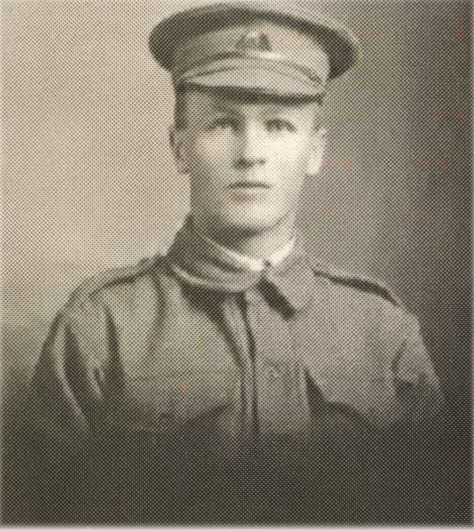
Raymond lost his life fighting for his country at the battle of Fromelles in France on 20 July 1916. His Red Cross file includes several accounts of his last known deeds of bravery when he was part of a Lewis Gun team on the morning of 20 July 2016 being bombarded by German troops. The battle lasted for 2 days and saw 5500 Australian soldiers killed. Raymond was listed as wounded and missing.
Sadly for his family, his brother was also killed in France on 5 November 1916.
His death was confirmed on 29th March 1917 when AIF Headquarters notified the family that he had been killed in action. Five years later, however, the family was notified that as the War Graves Unit had been unable to find where he had been buried.
Subsequently in 2010 – nearly 100 years after his death – his remains were identified following a DNA analysis in a mass grave which held about 250 bodies. This pocket knife was found on Private Bishop’s body. His remains are now re-interred in the Fromelles (Pheasant Wood) Military Cemetery, France.
Read More about Private Ray Bishop
- Ray Bishop: A Hero from the Fromelles – extracted from the MDHS Journal
- News from 100 Years Ago – extracts which mention Private Ray Bishop
- 17 September 1915 – Private Ray Bishop enlists
- 30 September 1916 – Private Ray Bishop reported as a prisoner of war
- 21 October 1916 – Private Ray Bishop wounded
- 7 April 1917 – Death of Private Ray Bishop reported
Read More about Anzac Day


 MORUYA and District Historical Society Blog
Leave a Reply