
November 18 2024 marks 100 years since the start of Granite Town – the epicenter of a massive quarrying operation, supplying granite for the imposing pylons of the Sydney Harbour Bridge.

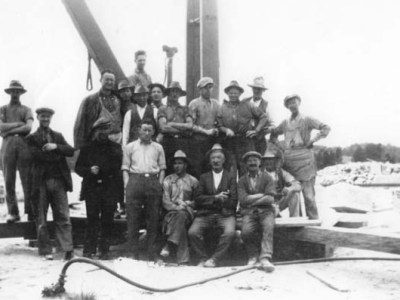
Moruya’s granite gained nationwide attention in the 1920s, when it was chosen for construction of the Sydney Harbour Bridge. Though purely decorative, the granite became a defining feature of an icon now recognised around the world. To achieve the mammoth task, Moruya saw an influx of quarry workers, stonemasons, and their families from Scotland, Italy as well as Australia – and Granite Town was born.
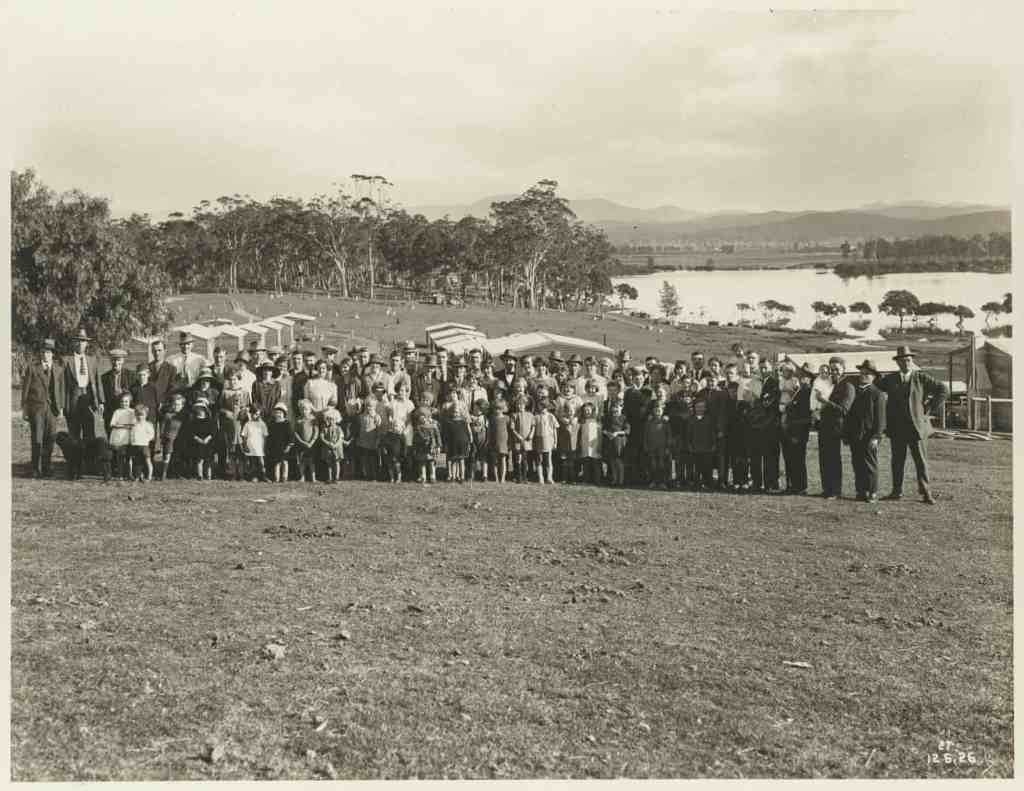
Scottish master stonemason John Gilmore was appointed as quarrymaster by Dorman & Long, the Bridge contractors. The Gilmore family arrived in Moruya on 11 November 1924, and the quarrymaster immediately set his mind to the task ahead. The first sod was turned a week later on November 18 1924.
The township was developed under the guidance of Lawrence Ennis, a fellow Scot and director of construction for the Bridge. Drawing on his experience with planned communities in the northern hemisphere, Ennis oversaw the creation of a unique, purpose-built multicultural settlement – the first of its kind in Australia.
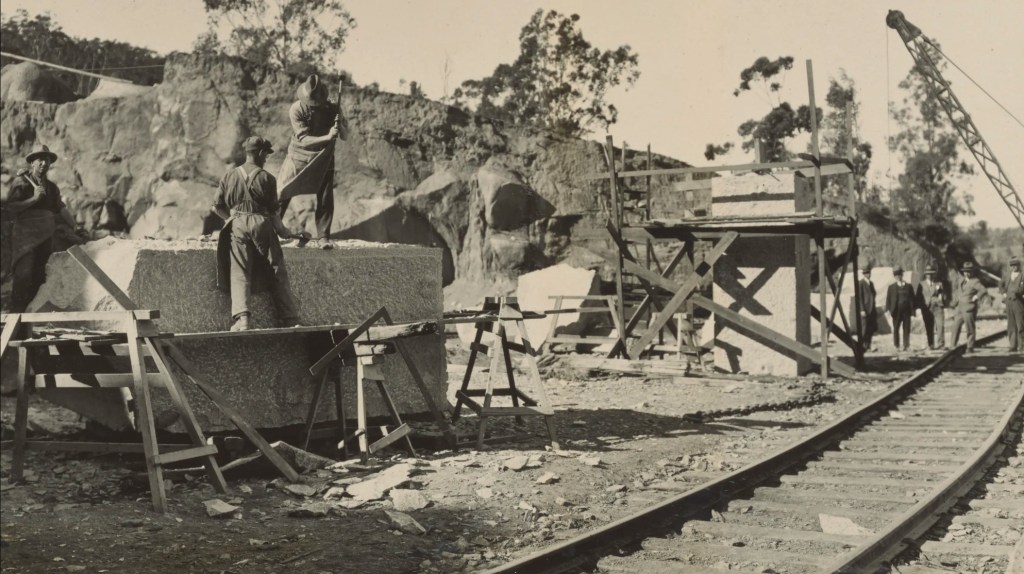
At its peak, the quarry employed 250 workers, offering rare job security in rural Australia during a challenging economic period. Granite Town was a thriving and well-equipped settlement, featuring 72 cottages, bachelors’ quarters, a school, a community hall, a co-op store, a post office, and even a swimming pool. The quarry and adjacent settlement was powered by its own dedicated electricity station.
Over seven years, workers cut 173,000 granite blocks to face the Bridge’s piers and pylons, and produced 152,910 cubic meters of crushed stone for aggregate fill. This ambitious project provided a critical economic boost, helping to shield Moruya from the worst effects of the looming Great Depression.
By 1931, the work was finished, and Granite Town faded almost as quickly as it had emerged. Most of the small cottages were sold and relocated, with only one remaining on the original site. While many workers returned to their homes, some, including John Gilmore and his family, chose to stay and build new lives in the area.
Granite Town’s story lives on through personal accounts and dedicated historians:
- Bob Colefax started as a clerk in December 1924 and later published his memoirs, offering a firsthand view of life in the quarry town.
- Christine Greig, John Gilmore’s great-granddaughter, has preserved family stories and written extensively on Granite Town’s unique culture and history.
- Bill Glennie, a retired Scottish history teacher, conducted detailed research on the Scottish stonemasons, the “quarry Scotties,” who helped build the town.
- Shirley Jurmann, a local historian with family ties to granite mining, has added to our understanding of Granite Town’s impact on the region.
Quaary Park was established by Rotary and Skillshare in 2002 to promote the story of Granite Town. A monument to Granite Town was established in Moruya’s Apex Park in 2004. Moruyas Granite Quarries are also listed as National Engineering Heritage.
MDHS Publications – Books
- Moruya’s Golden Years by Bob Colefax, former clerk at the quarry
- Not Forgotten, Memories in Stone by Christine Greig
- Granitetown Memories by Ruth Webberly
MDHS Publications – Articles & Posts
- The Rise and Fall of Granite Town – extracts from the Moruya Examiner by Bill Glennie
- Materials used in the Sydney Harbour Bridge Construction – J. Bradfield 1928
- More Articles by Bill Glennie and others – including an article on the Italian Workers
- The Significant Legacy of Moruya Granite
- Signing of the Harbour Bridge Contract
Other Resources
- To Make a Bridge. Where did the granite of the Sydney Harbour Bridge come from?
- The rock-busting town that went from boom to bust
- The story of Moruya granite and the creation of a famous bridge stone by stone
- Granite Town: Moruya’s role in one of Australia’s best landmarks
- ‘Quarry Scotties’: the story of the Sydney Harbour Bridge’s forgotten migrant workers
- Granite Town – Moruya River. A Chronicle of the Almost Forgotten People Who Quarried for the Sydney Harbour Bridge
- Moruya: A Source of Stone
- Friends of Moruya Quarry Park
Related posts

100 Years Ago – 9 May 1925
Mr. P. Mills auctioned land in Moruya; notable events included a marriage announcement, a concert for town improvements, and a significant fire in Bodalla causing…
100 Years Ago – 2 May 1925
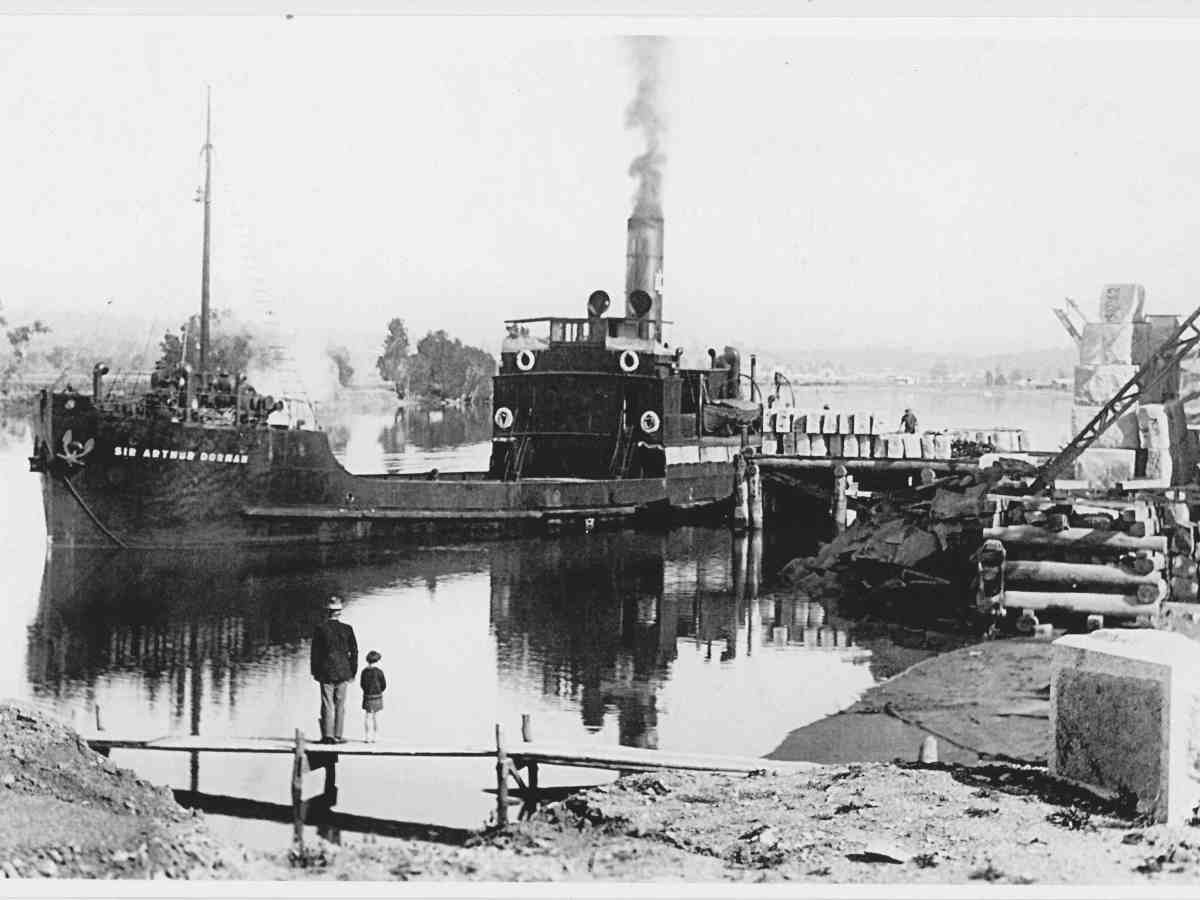
Mr. Bate stores significant fodder on his property, while steamers are launched for bridge construction. A ball supports cricket, providing enjoyment and funds for the…

100 Years Ago – 24 January 1925
Malabar Bridge has caused damage to vehicles; and the Nelligen hotel may not be rebuilt due to high costs. In Moruya, quarrying is set to…

100 Years Ago – 13 December 1924
Dredge Antleon starts operations at Quarry Wharf; Moruya Race delicensed Royal Hotel to close on Christmas Eve; mining developments reported; Eurobodalla Shire meeting notes highlighted.

100 Years Ago – 15 November 1924
A four-year-old boy from Mogo passed away from gastritis. Local efforts for road repairs and dairy factory updates continue. Granite quarry work commenced.

100 Years Ago – 13 September 1924
New Ford trucks for Eurobodalla Shire. Wireless users are urged to get licenses. Dorman & Long Harbour Bridge granite quarry manager is coming to Moruya.…
100 Years Ago – 16 August 1924
Progress Association hopes that the Bridge quarry will alleviate unemployment. Eurobodallaites are hosting a euchre party for the Bursary Fund, while Mr. Preddy screens “If…

Signing the Harbour Bridge Contract – An Important Moment in History
The contract to construct Sydney Harbour Bridge, was signed in 24 March 1924. Moruya granite was specifed as the main decirative element.

100 Years Ago – 1 March 1924
Dorman Long & Co. wins Harbour Bridge tender, plans to use Moruya quarry. Radio demonstration wows Moruya townspeople. Bodalla farms up for sale.
The Significant Legacy of Moruya Granite
Nestled on the banks of the Moruya River in New South Wales, Australia, the granite quarries have been a thriving hub of granite production since…
 MORUYA and District Historical Society Blog
Leave a Reply