
On 24 March 1924 the NSW Government signed a Contract for the Construction of an Arch Bridge Across Sydney Harbour – creating Australia’s most iconic landmark and forever etching Moruya’s name into the history of a nation. Today the Sydney Harbour Bridge is considered the world’s greatest arch bridge and one of Australia’s best-known and photographed landmarks.
Design and construction of the Bridge was overseen by Dr John Bradfield, an outstanding civil engineer who was a chief engineer at the NSW Department of Public Works. From the outset Bradfield had a vision of a bridge that would be both sturdy and monumental.
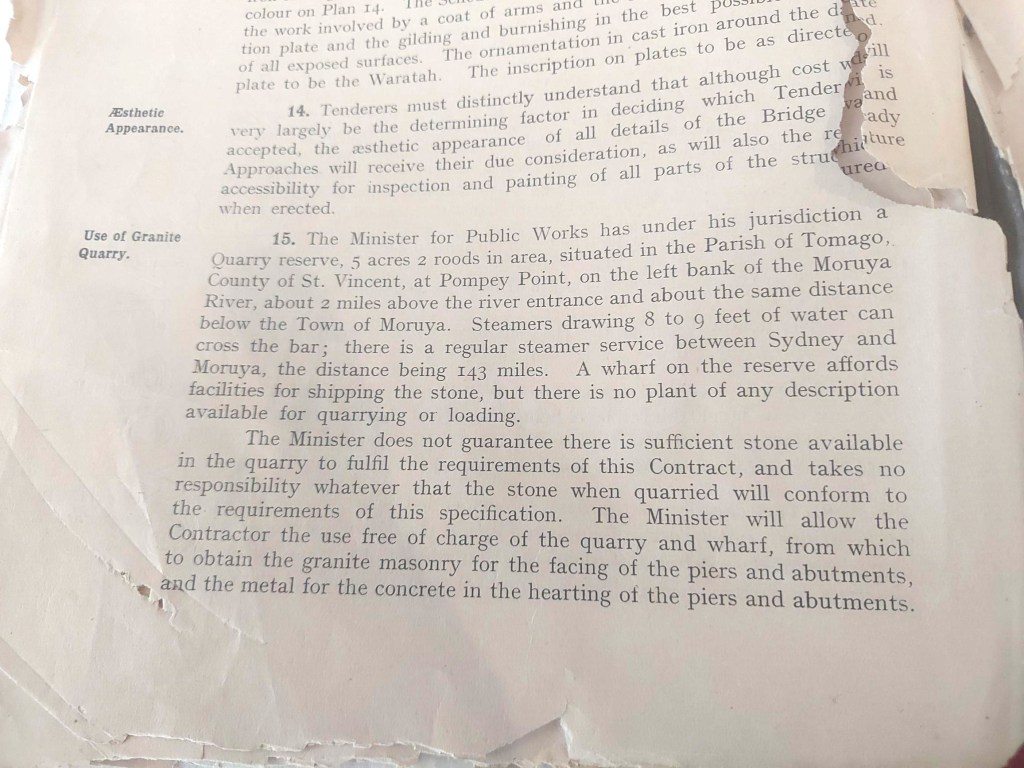
Bradfield decided that the bridge supports and decorative pylons would be faced with granite. He had visited Moruya (305 kilometres south of Sydney) in 1921, and determined that the quality and ease of access to the granite situated on the banks of the Moruya River made it ideal for the project.
After more than 2 decades of various design considerations, the NSW Parliament passed the Sydney Harbour Bridge Act in 1922. Designs and tenders were invited for a Cantilever or Arch Bridge to satisfy Bradfield’s broad requirements. Tenders were finalised on 16 January 1924 – 20 tenders were received from 6 firms.
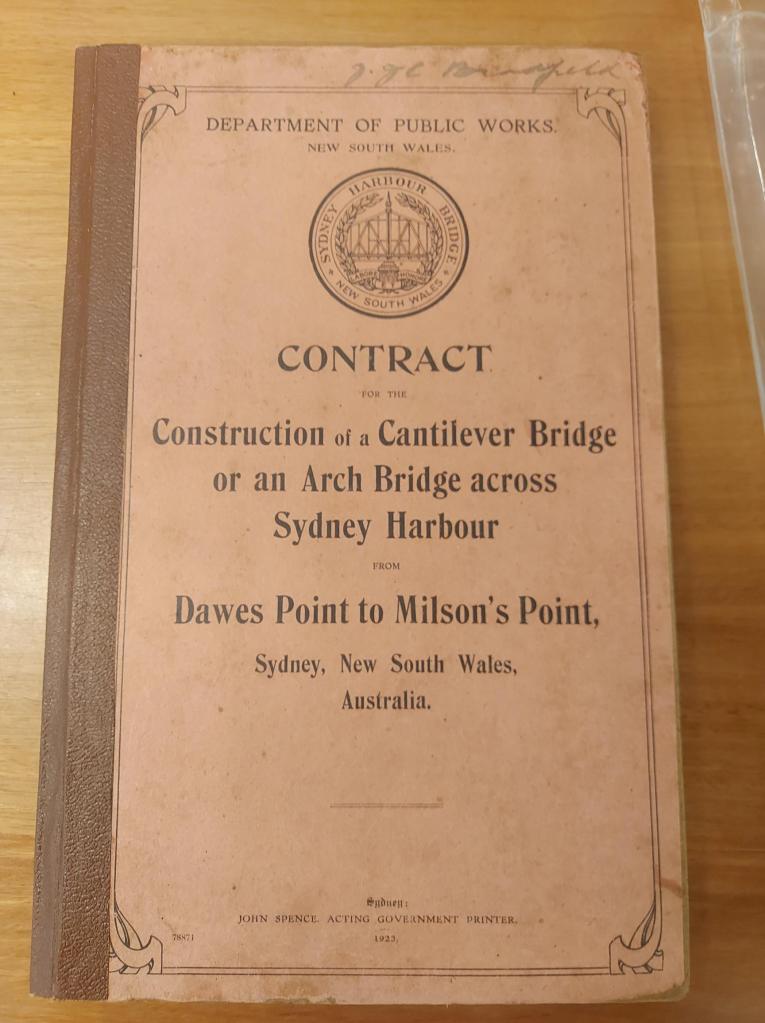
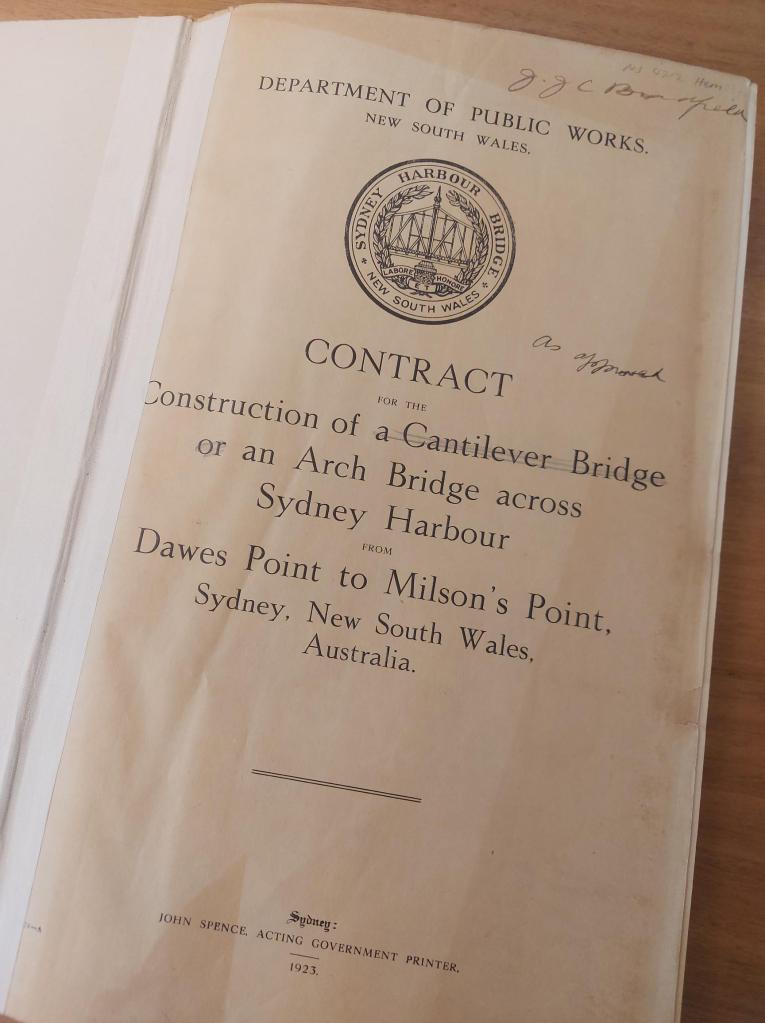
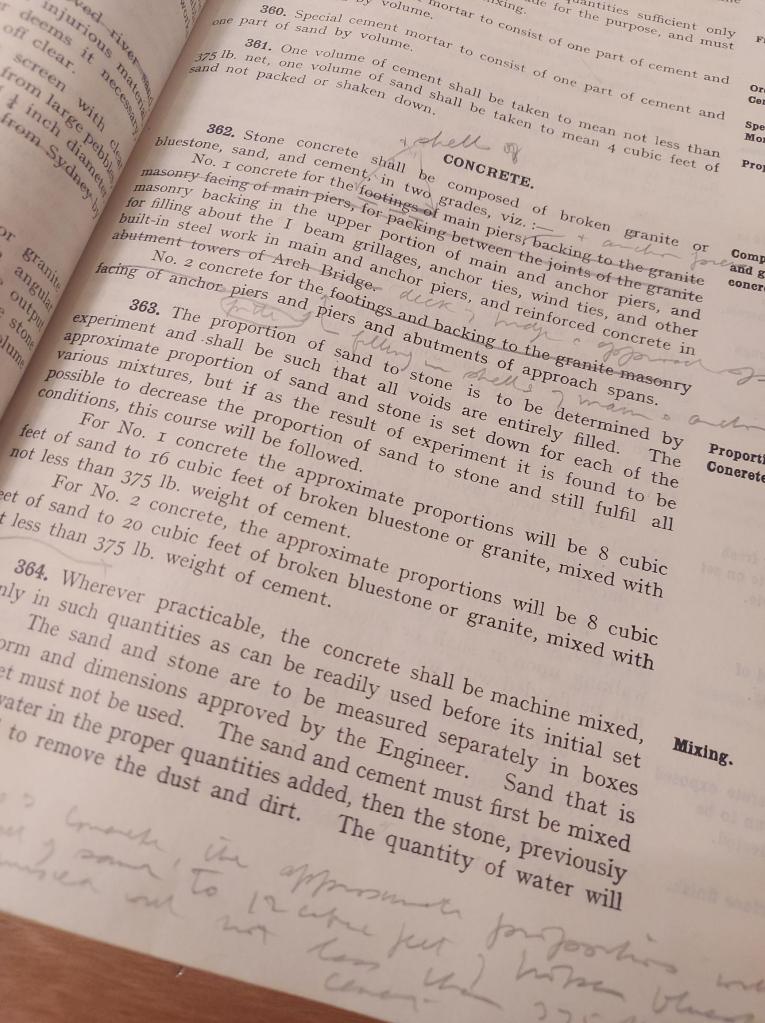
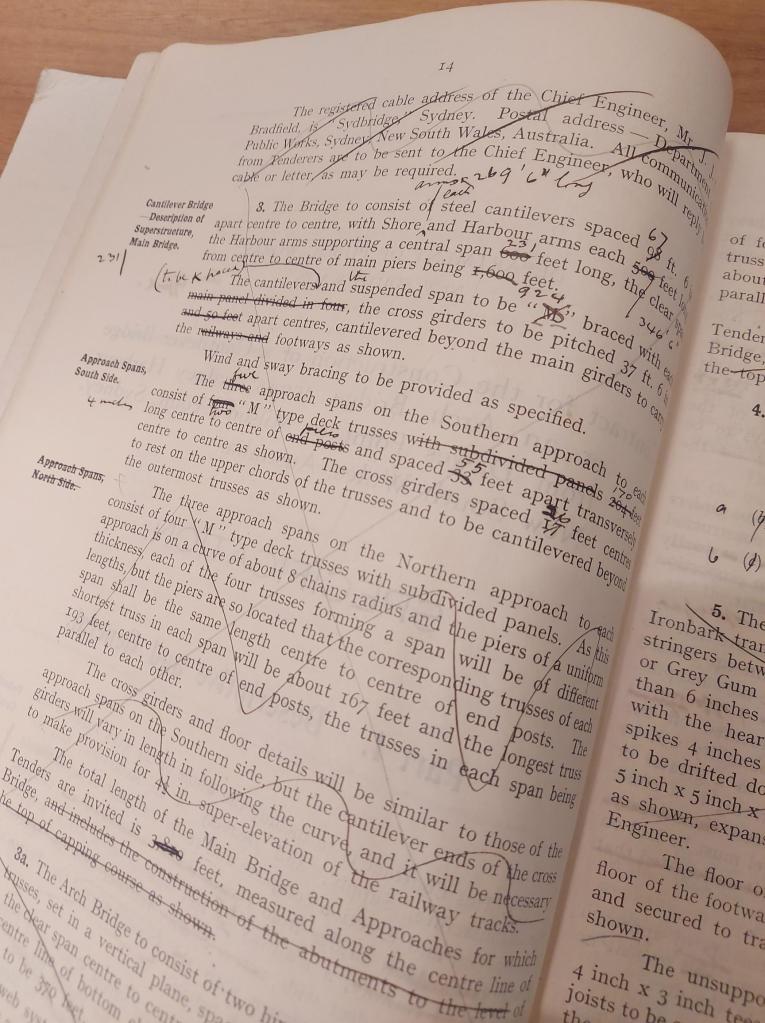
Among Bradfield’s papers at the National Library of Australia are his annotations of the 1923 contract specification, showing a preference for an arch design, sections relating to the cantilever design have been crossed out.
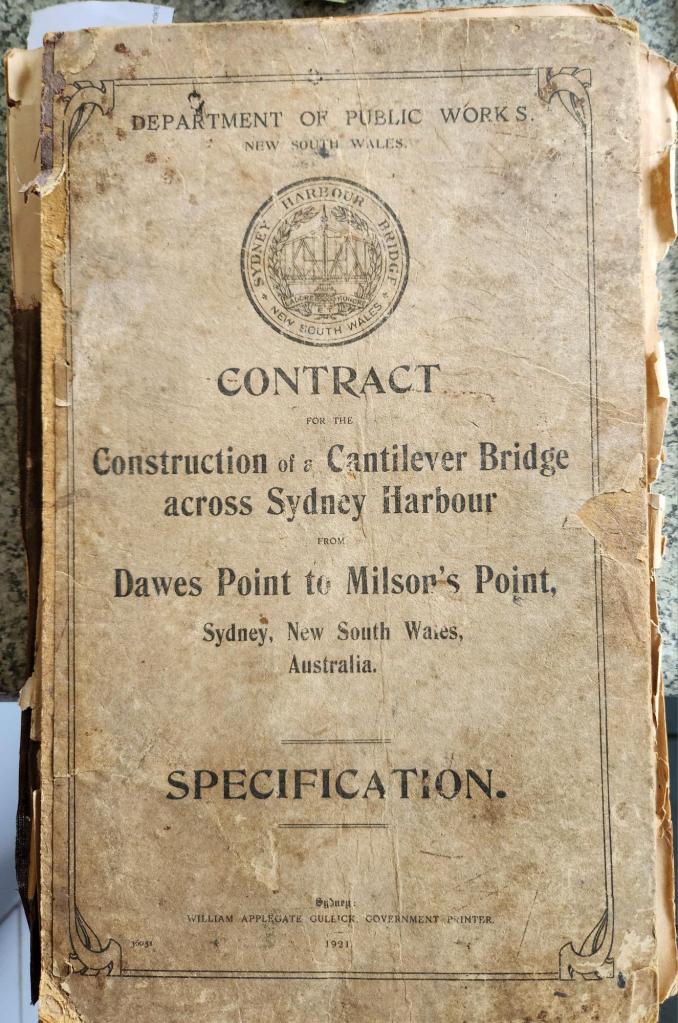
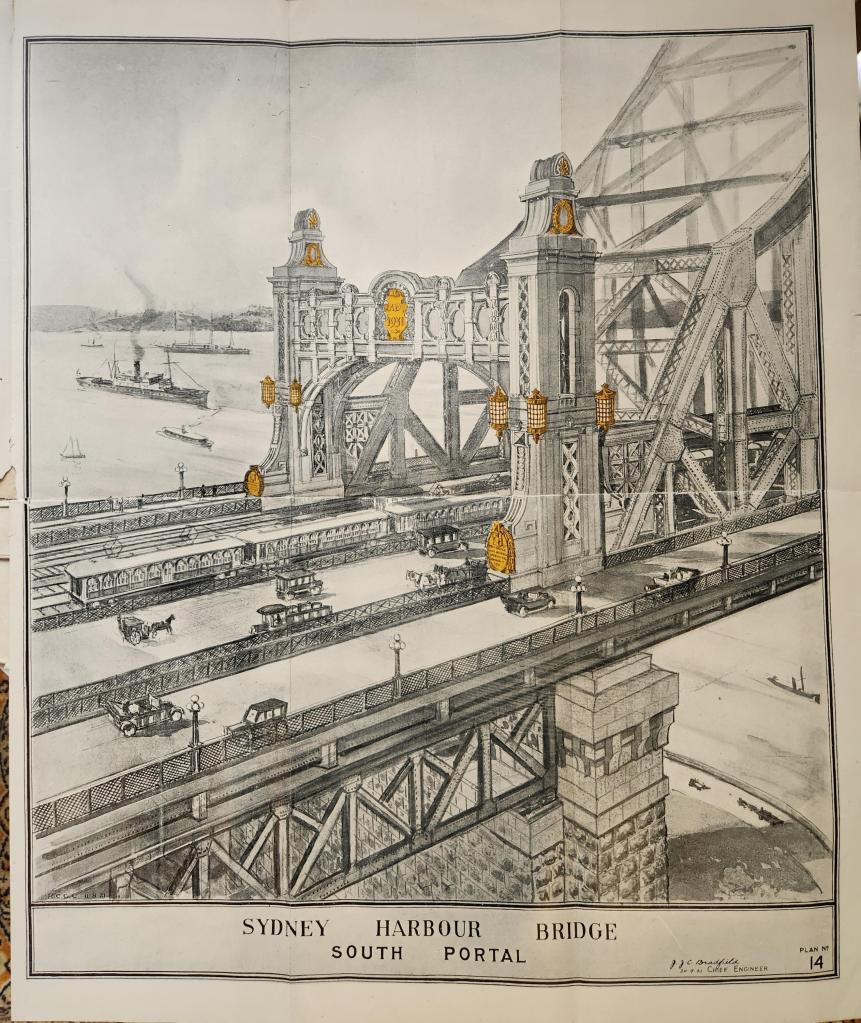
The MDHS Collection holds an orginal copy of the 1921 specification for a cantilever design, which ultimately was rejected in favour of the cheaper arch design. It was estimated the cantilever design would cost an extra £400,000, and that it would be less sturdy. This version of the specification recommends the use of Moruya granite for the project.
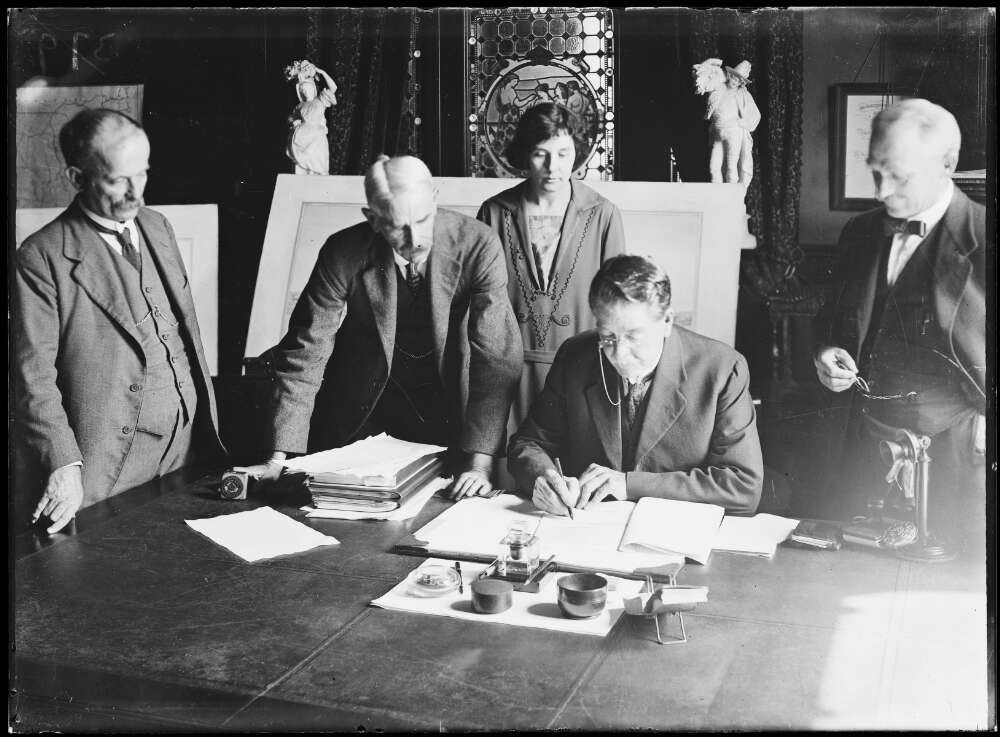

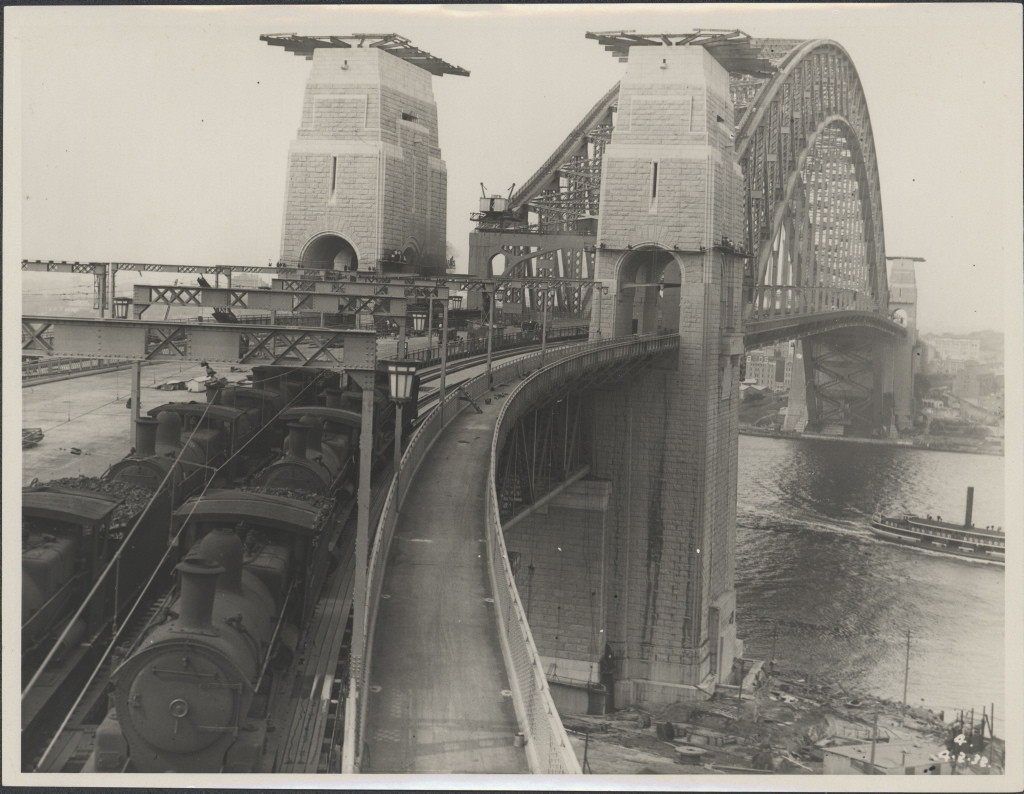
On 1 March 1924, British engineering firm Dorman & Long won the tender with a design to build an Arch Bridge. The final contract was signed on 24 March 1924.
As early as May 1921, following a memorable drive to Moruya through rain and floods to check out the
Always take a second look – MDHS Journal, March 2012
quality of the local granite, John Bradfield had decreed that Moruya granite would be used for the Bridge’s architectural features.
Good news for Moruya – Dorman Long & Co’s tender for the North Shore bridge has been accepted, and the firm intends to make use of the Moruya quarry for the granite piers. It is expected that work will be commenced shortly.
Moruya Examiner 1 March 1924
Mr. Norman Long, of Dorman, Long and Co. arrived in Moruya yesterday morning. . . they were thoroughly satisfied with the quality and quantity of the granite, stating that the stone is the best in the world and in ample quantities for all requirements of the North Shore bridge . . .
Moruya Examiner 8 March 1924
MDHS Collection
MDHS Collection
MDHS Collection
National Library Collection
National Library Collection
National Library Collection
National Library Collection
Read more
- The Bridge – State Library of NSW
- John Bradfield engineer – Wikipedia
- What Sydney Harbour Bridge Could Have Looked Like – Eric Baldwin, Arch Daily
- To Make a Bridge – Traces Magazine 2014
- Always take a second look MDHS Journal, March 2012
- Significant Legacy of Moruya Granite
- Moruya Granite Articles – MDHS
- Tenders are opened – 16 January 1924
- Sydney Harbour Bridge – Report on Tenders 1924– NSW State Library
- NLA, Collected Papers of John Job Crew Bradfield, 1908-1943
- The Bridge – Readjusting the Tax. SMH 4 March 1924. NLA Trove
- Sydney Harbour Bridge to Cost £4,217,721 – SMH 5 March 1924. NLA Trove
- More Trove articles on the Bridge and Moruya – early 1924. NLA Trove


 MORUYA and District Historical Society Blog
Leave a Reply